Pool Water Testing 101: What To Test, How Often & Why It Matters
If your pool looks perfectly clear but your eyes still sting after a swim, or you've got a test kit sitting in the cupboard but aren't quite sure what the numbers actually mean, you're not alone. Pool water testing is the single most useful habit for keeping a pool genuinely healthy, not just visually clean, and it's simpler than most people expect once you know what you're looking at.
The Quick Answer: What to Test and How Often
At a minimum, you should be testing pH, free chlorine, total alkalinity, stabiliser (cyanuric acid) and, for saltwater pools, salt level, with calcium hardness worth checking periodically too. Through swim season, weekly testing is a sensible baseline, more often after heavy rain or a spike in pool use. In cooler months, testing can generally ease back, though it shouldn't stop altogether. A home test kit is fine for routine checks, but a free in-store test with professional equipment gives you the fuller picture, particularly for readings a basic kit doesn't cover well.
What Should You Be Testing in Your Pool Water?
pH measures how acidic or alkaline your water is, and it's the reading that affects almost everything else, including how well your chlorine actually works. Pool Zone recommends keeping pH between 7.2 and 7.6. High pH is generally corrected with a pH reducer (acid), while low pH is brought up with a pH increaser (alkalinity booster).
Free chlorine is your pool's active sanitiser, the part actually killing bacteria and algae right now, as opposed to chlorine that's already been used up. This is the number that tells you whether your pool is genuinely being sanitised, not just whether chlorine has been added at some point.
Total alkalinity acts as a buffer for your pH, helping keep it stable rather than swinging wildly with every chemical addition or change in conditions. If your pH keeps drifting no matter how often you correct it, low or high alkalinity is often the underlying reason.
Salt matters specifically for saltwater pools, since your chlorinator converts salt into chlorine, and the whole system depends on salt sitting within the right range for your specific chlorinator to function properly.
Stabiliser (cyanuric acid) protects chlorine from breaking down too quickly in direct sunlight. Without enough stabiliser, chlorine burns off fast on a sunny day, but too much can also reduce chlorine's effectiveness, so it's a balance rather than a "more is better" situation.
Calcium hardness affects both water comfort and your pool's surfaces and equipment. Water that's too low in calcium can be corrosive to pool surfaces and fittings, while water that's too high can lead to scale build-up.
Each of these plays a different role, but together they determine whether your pool is genuinely balanced, not just clear to look at.
How Often Should You Test Your Pool Water Through the Year?
Swim season (spring through summer): Weekly testing is a sensible routine during the months your pool sees the most use and the most sun. Port Macquarie's strong summer sun burns off unstabilised chlorine faster than milder climates, and heavier summer downpours common along this stretch of coast can dilute your water and throw chemistry out within a single storm, both genuine reasons to test more often here than you might in a cooler, drier region.
After heavy rain or a big pool day: Test sooner than your usual schedule, since a downpour or a weekend of heavy swimming use can shift your readings noticeably in a short space of time.
Cooler months: Testing can generally ease back, but it shouldn't stop altogether. A pool sitting quietly over winter can still develop imbalances, and Mid North Coast backyards often deal with a steady load of leaf and garden debris year-round, which affects water chemistry even when nobody's swimming. Testing doesn't stop when the swimming does. Our guide to
winter pool care explains why.
Home Test Kit or In-Store Water Test: What's the Difference?
| Test Strips | Liquid/Drop Kit | In-Store Professional Test | |
|---|---|---|---|
| Speed | Fastest | Moderate | Requires a trip in |
| Accuracy | Least precise | More accurate for home use | Most comprehensive |
| Coverage | Basic readings only | Core readings | Full range, including readings many home kits don't cover |
| Best for | Quick daily checks | Regular home monitoring | Confirming a problem, new pool owners, or anything unusual |
Test strips are quick and cheap, genuinely useful for a fast daily glance, but they're the least precise option. A liquid or drop-style kit is generally more accurate for regular home use and worth the small extra effort. A professional in-store test gives you the fullest picture, since it typically covers additional readings that many home kits simply don't test for well, or at all.
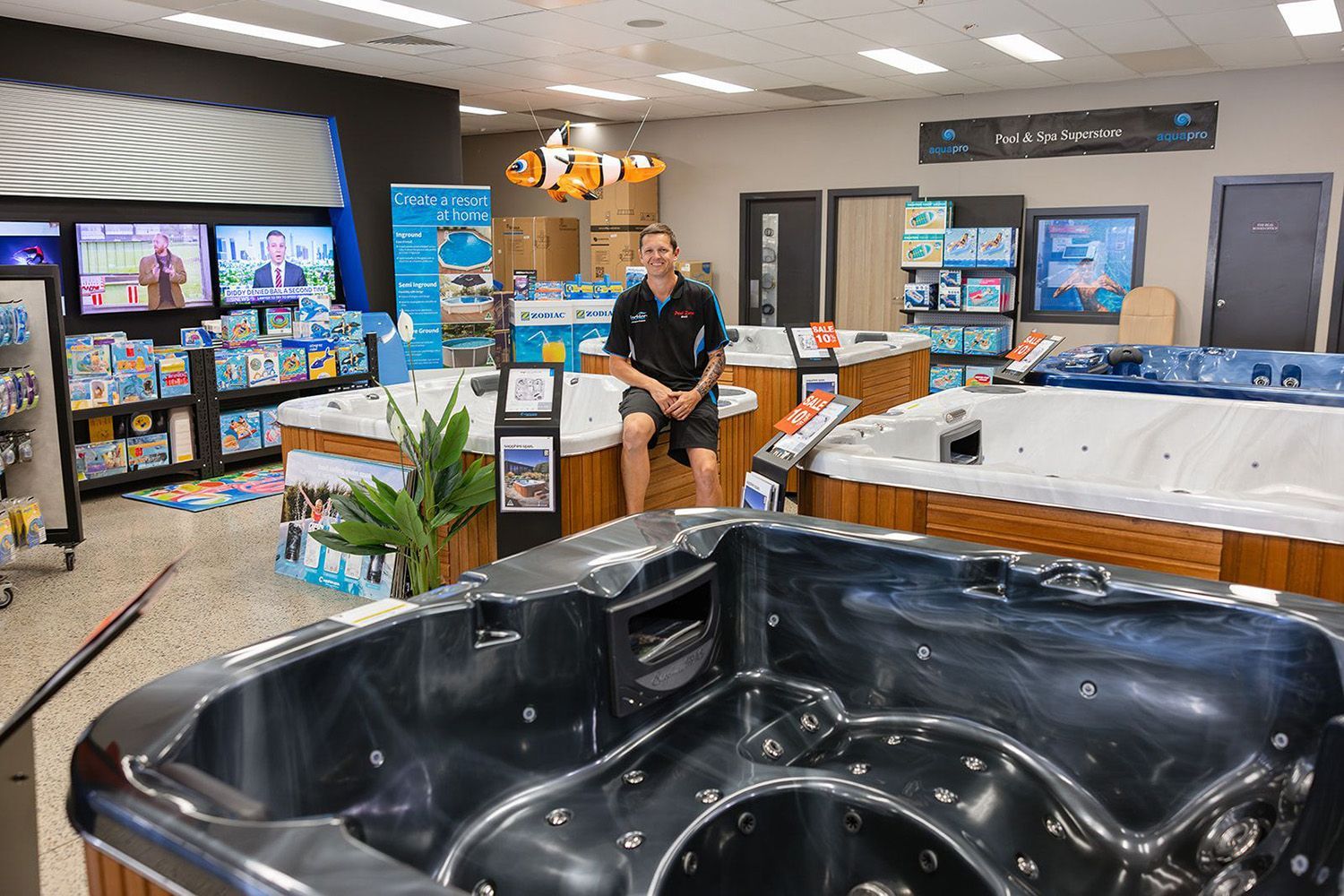
Bring a sample into our pool shop in Port Macquarie and we'll run a free water test on the spot, using professional equipment, then give you a printout with detailed instructions and product recommendations to bring things back into balance.
Why Does Balanced Water Matter If Your Pool Looks Clear?
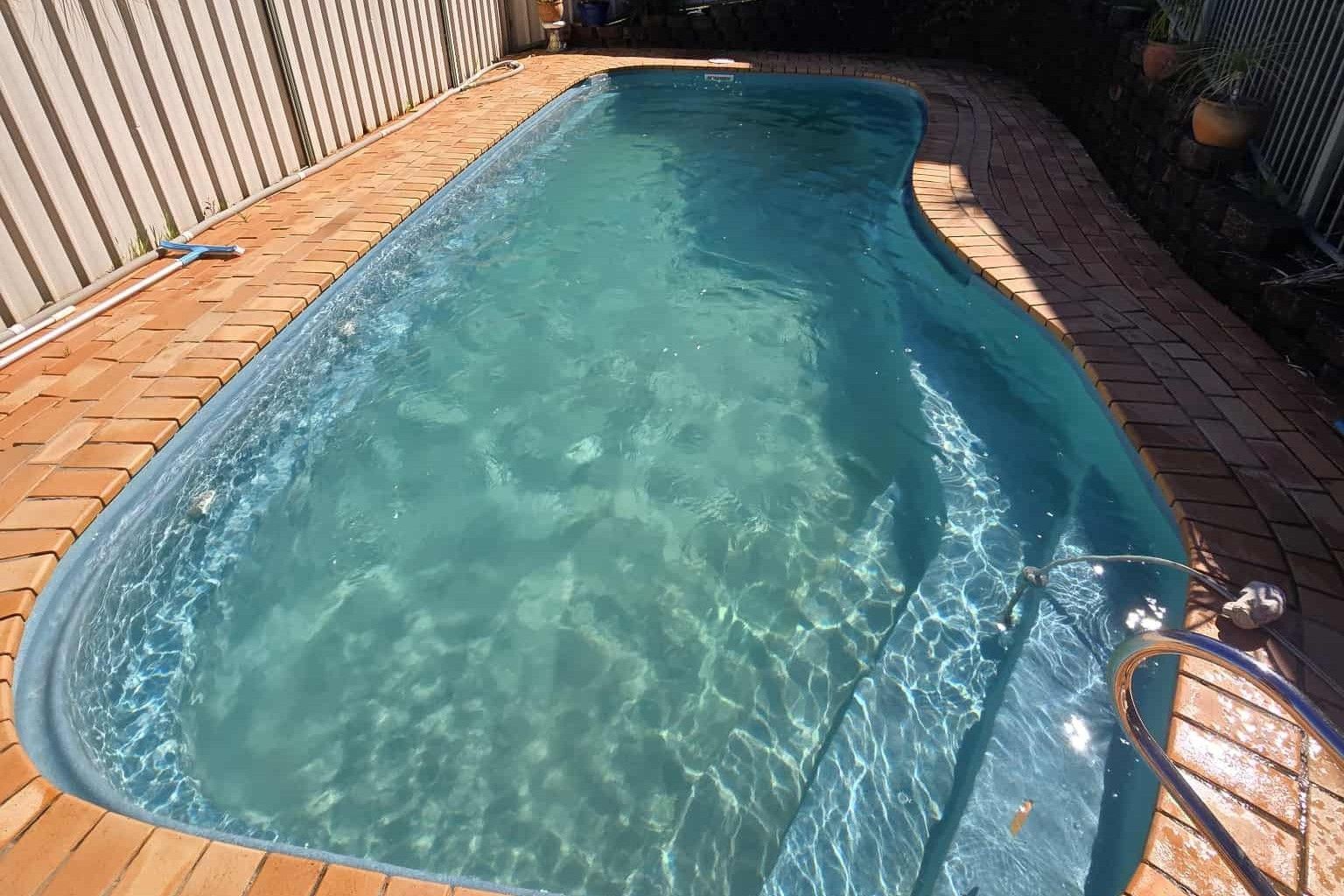
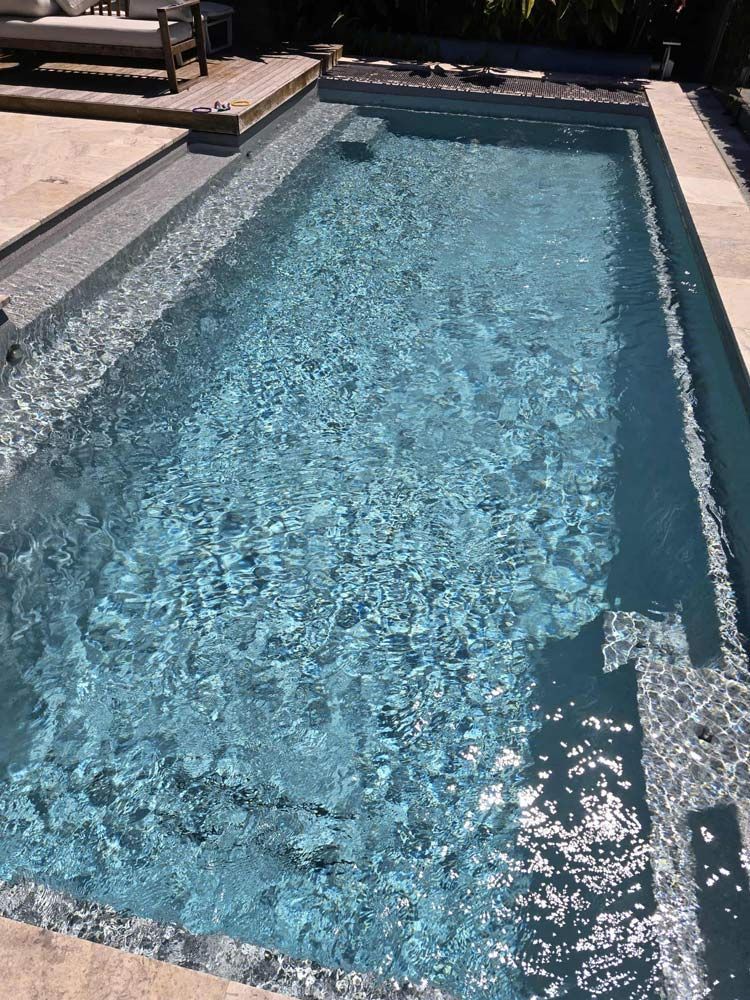
This is genuinely one of the most common misunderstandings we hear from pool owners, and it's an easy one to fall into. Clear water tells you the water isn't visibly cloudy or green, but it doesn't tell you whether your chlorine level is actually doing its job, whether your pH is stinging swimmers' eyes and skin, or whether your calcium levels are quietly corroding equipment or building up scale.
Unbalanced water can cause skin and eye irritation even in water that looks perfectly inviting, and it can gradually damage pool equipment over time, corrosion, scale build-up, a chlorinator working harder than it should, none of which shows up as a visible problem until it's already progressed. This is exactly the "my pool looks clear but my eyes sting" scenario we see regularly at the shop, and it's almost always a chemistry issue rather than anything visibly wrong with the water.
Water that stays out of balance for too long can wear down your chlorinator and pump. Here are the signs your pool equipment needs replacing, worth a read if you suspect it's already gotten to that point.
Bring In a Sample and Get the Full Picture
Pool water testing doesn't need to be complicated, but it does need to be consistent, and it needs to cover more than just what a quick glance can tell you. Once you know your readings, the right pool chemicals bring everything back into balance, whether that's a pH reducer, a stabiliser top-up, or something more specific to your pool's setup.
Our team brings over 30 years of collective industry experience to every water sample that comes through the door, so if you're not confident reading your own test kit, or you just want the full picture, bring a fresh sample into Pool Zone and we'll test it for free.
Pool Water Testing FAQs